

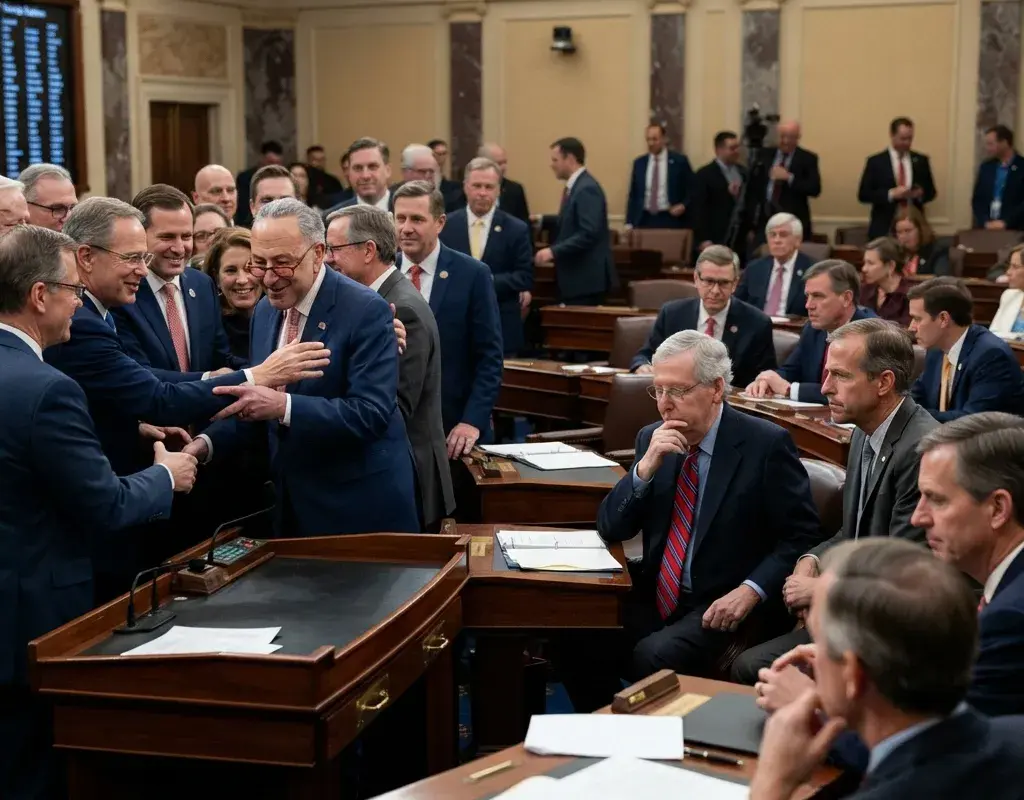
Democrats have fundamentally altered the landscape of the U.S. Senate, transforming a precarious position into a commanding lead heading into the next presidential cycle. Following a series of unexpected victories, the party is on track to secure a 56-44 majority, marking its strongest hold on the chamber since 2009. This shift places the Republicans in a steep climb, as they will now need to reclaim at least six seats to regain control, provided they do not hold the vice presidency.
The immediate battlefield centers on four critical Democratic held seats in Arizona, Nevada, Georgia, and Pennsylvania. For the GOP to mount a realistic challenge for the majority in 2028, they essentially must sweep these states. However, internal dynamics may complicate things for the incumbents. While Mark Kelly and Raphael Warnock are already being discussed as potential presidential contenders, John Fetterman faces a different struggle as his standing among Democratic voters has seen a noticeable decline. Meanwhile, Republicans face their own vulnerabilities in Wisconsin and North Carolina, where previous wins were achieved by razor thin margins.
Beyond the traditional swing states, Democrats have managed to penetrate deeply red territory, creating what analysts call an extended battleground. Unexpected competitiveness in states like Ohio and Florida suggests that a filibuster proof majority of sixty seats is theoretically possible if current trends continue. Much of this momentum was driven by a historic surge in Black voter turnout across the South, particularly in South Carolina and Mississippi. Activists attribute this energy to widespread frustration over redistricting efforts and judicial decisions that limited voting rights protections.
For Republicans to overturn this trend, they may be forced to venture into historically blue territory for the first time in years. New Hampshire appears to be their most viable target among lean-Democratic states, but moving beyond that requires winning in strongholds like Colorado or Washington—feats that proved impossible during previous cycles despite aggressive recruitment efforts. Ultimately, the political tables have turned entirely; whereas Democrats once had to hope for miracles in red states to survive, Republicans now find themselves needing breakthroughs in blue ones just to compete for control.